
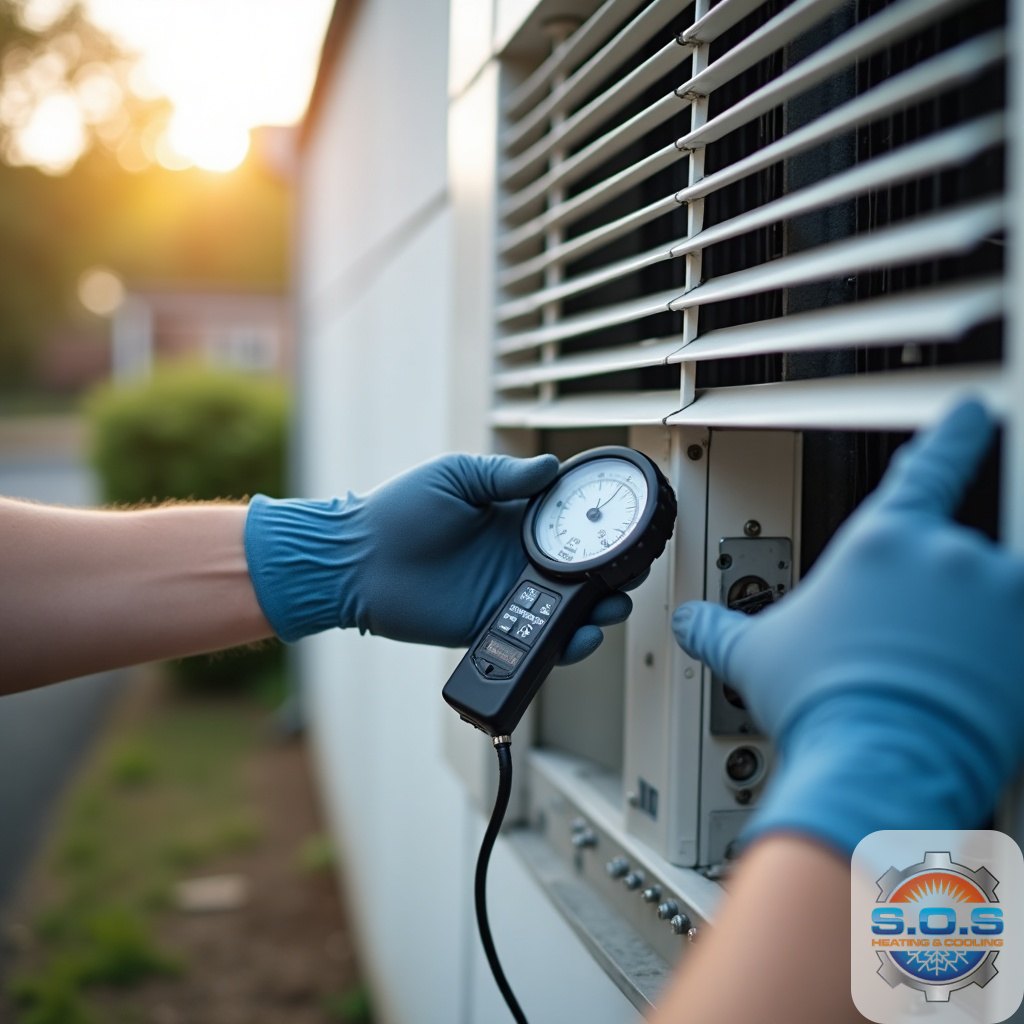
Warm Air Woes: Troubleshooting Your AC Before Calling a Technician
Understanding the Cooling Cycle: Why Your AC Fails To understand why is my ac blowing warm air troubleshooting steps are necessary, it…
Understanding the Cooling Cycle: Why Your AC Fails
To understand why is my ac blowing warm air troubleshooting steps are necessary, it helps to know how your system is supposed to work. Your air conditioner doesn't actually "create" cold; it removes heat from your indoor air and dumps it outside.
This process relies on a continuous refrigerant cycle. The indoor unit contains evaporator coils where cold refrigerant absorbs heat from your home's air. As the air passes over these coils, it should drop significantly in temperature—typically, air conditioners are designed for approximately a 20-degree temperature drop across the evaporator coil. If your indoor air is 75 degrees, the air coming out of the vents should be around 55 degrees.
The refrigerant then travels to the outdoor condenser unit, where the compressor (the "heart" of the system) increases the pressure, and the condenser coils release that absorbed heat into the outside air. If any part of this loop is broken—whether it’s a lack of airflow, a power loss to the outdoor unit, or a refrigerant leak—the cycle fails, and you end up with warm air. To keep your system running at peak efficiency, you should always look for ways to Optimize Your AC's Performance.

Why Is My AC Blowing Warm Air Troubleshooting Steps
When your home starts feeling more like a sauna than a sanctuary, don't panic. There are several essential DIY checks you can perform to narrow down the problem. Before you assume the worst, verify the power supply to both the indoor and outdoor units. Sometimes a simple electrical hiccup is the only thing standing between you and a cool living room.
Start by feeling the airflow at your vents. Is the air blowing strongly but warm, or is the airflow weak? Strong but warm air often points toward the outdoor unit or refrigerant, while weak airflow usually suggests a blockage or filter issue. If you aren't sure where to begin, check out our guide on What to Do When Your AC Stops Cooling. Taking a moment for AC Repair Recognizing Common Issues can save you a lot of time and help you provide better information if you eventually need to call us.
Thermostat Settings: The First Step in Why Is My AC Blowing Warm Air Troubleshooting Steps
It sounds simple, but you would be surprised how often a thermostat setting is the culprit. We’ve seen many cases in Salt Lake City where a curious child or an accidental bump changed the settings.
- Cool Mode: Ensure the thermostat is actually set to "Cool." If it was accidentally switched to "Heat" or "Off," the blower fan might still run, but it won't be cooling the air.
- "Auto" vs. "On": This is a big one. If your fan is set to "On," the blower runs 24/7, even when the cooling cycle isn't active. This means that between cooling cycles, the fan is just circulating unconditioned, room-temperature air. Switch it to "Auto" so the fan only blows when the air is actually being chilled.
- Batteries: If your thermostat screen is blank or fading, replace the batteries. A weak thermostat might not be able to send the signal to the outdoor unit to kick on.
If you are experiencing specific issues with the fan not responding correctly, you might be dealing with AC Fan Limit Control Issues South Salt Lake.
Air Filter Maintenance: A Key Part of Why Is My AC Blowing Warm Air Troubleshooting Steps
Dirty air filters are one of the most frequent culprits if your AC is running but not cooling. When a filter is clogged with dust, pet hair, and Utah dander, it restricts airflow. This restriction prevents the evaporator coils from absorbing heat effectively.
When airflow is restricted, the system has to work twice as hard, leading to massive system strain. In some cases, the lack of air causes the coils to get too cold and freeze over (more on that in a bit). We recommend you replace air filters every 1-3 months to maintain proper airflow and cooling efficiency. If your home feels stuffy, you may need to Solve AC Airflow Restriction in Salt Lake City to get things moving again.
Inspecting the Outdoor Condenser and Electrical Components
If your indoor fan is blowing but the air is warm, look outside. 90% of the time, the culprit of a hot air issue is in the outdoor condenser unit. This unit is responsible for releasing the heat collected from inside your home. If it can't breathe, it can't cool.
First, check for debris. Grass clippings, leaves, and "cotton" from local trees can coat the condenser coils, acting like a warm blanket that keeps the heat trapped inside. You can gently hose down the coils with the power off to remove this buildup.
Next, check the power. Go to your electrical panel and look for the circuit breaker labeled "AC" or "Condenser." If it has tripped, reset it once. If it trips again immediately, do not keep resetting it—this indicates a serious electrical fault. Also, check the outdoor disconnect switch located in a small box near the unit itself. If you notice the fan outside isn't spinning, you might be Fixing AC Condenser Fan Problems. For those in Farmington or nearby, AC Electrical Connection Problems Farmington are a common reason for a non-responsive outdoor unit.

Dealing with Frozen Coils and Refrigerant Leaks
Sometimes, your AC unit might actually be too cold. If you see ice on the copper refrigerant lines or the indoor evaporator coil, your system has frozen up. This usually happens because of restricted airflow (dirty filters) or low refrigerant levels.
If you find ice, turn the AC off immediately. Running it with frozen coils can kill your compressor. Switch the thermostat to "Fan Only" to help the ice melt. This can take several hours, so be patient. Once the ice is gone, check your filter. If the filter is clean and the unit freezes again, you likely have a refrigerant leak.
How can you tell the difference? Use this table:
| Symptom | Frozen Coils (Airflow Issue) | Low Refrigerant (Leak) |
|---|---|---|
| Airflow Strength | Very weak or non-existent | Normal strength but warm |
| Noises | Often silent or muffled | Hissing or bubbling sounds |
| Ice Location | Visible on indoor coils/lines | Visible on outdoor lines |
| Fix | Change filter/clean coils | Requires professional repair |
If you need help with a frozen system, we have a guide on how to Fix AC That Freezes Up in Salt Lake City. You can also try to How to Clean Air Conditioner Coils yourself if the buildup is visible and accessible.
When to Call a Professional Technician
While we love empowering homeowners to handle the basics, some things are simply unsafe or illegal to do yourself. For example, if you suspect a refrigerant leak, you cannot simply "top it off." Refrigerant is a regulated substance, and only EPA-certified technicians can safely handle it. Furthermore, a leak means there is a hole in your system that must be found and sealed.
Other red flags that require a pro include:
- Compressor Failure: If the outdoor unit makes a loud "grinding" or "clunking" noise, the compressor may be failing.
- Electrical Issues: If you smell burning or see sparks, turn the power off at the breaker and call us immediately.
- Frequent Tripping: A breaker that won't stay on is a fire hazard.
If you see Signs Your AC Compressor Is Failing or Signs of Faulty Wiring in Your HVAC Unit, it’s time to bring in the experts. For residents in the Millcreek area, our AC Repair Millcreek UT Complete Guide provides more localized insights into common regional issues.
Frequently Asked Questions about AC Troubleshooting
Should I turn off my AC if it is blowing warm air?
Yes, absolutely. If your AC is blowing warm air, it means the system is not operating within its designed parameters. Continuing to run it can lead to overheating, shortened component life, or even a total compressor burnout. Major component repairs like compressors or coils can cost $1,000 or more, so turning it off now can save you a massive headache later. If your system is turning on and off rapidly without cooling, you should learn Why Your HVAC System Short Cycles to prevent further damage.
How often should I schedule professional AC maintenance?
We recommend a professional tune-up at least once a year, ideally in the spring before the April through September heat hits Salt Lake City. Professional service typically includes cleaning the coils, checking refrigerant levels, and tightening electrical connections. This is the best way to prevent "warm air woes" before they start. For those who want the deepest clean, we offer Professional AC Coil Cleaning Methods that go far beyond what a garden hose can do.
What role do clogged drain lines play in cooling issues?
Your AC doesn't just cool the air; it dehumidifies it. This moisture collects in a drain pan and flows out through a condensate line. If this line gets clogged with algae or debris, a safety "float switch" will trigger. This switch is designed to shut down the system (or just the outdoor unit) to prevent water from overflowing and damaging your home. If you've wondered What Causes AC Drain Line Clogs or Why Your AC Leaks Water Inside Your Home, a simple cleaning of the drain line is often the answer.
Conclusion
Dealing with an AC that blows warm air is never fun, but by following these why is my ac blowing warm air troubleshooting steps, you can often solve the problem yourself or at least identify the issue for your technician. From checking your thermostat to replacing a dirty filter, many fixes are right at your fingertips.
At S.O.S. Heating & Cooling, we are dedicated to keeping our neighbors in Salt Lake City, Draper, Sandy, and throughout the valley comfortable all year long. Whether you need an emergency repair in the middle of a July heatwave or a preventive tune-up to keep your system running efficiently, we're here to help. We offer 24/7 emergency repairs and flexible financing to ensure your home stays cool without the stress.
If your troubleshooting steps haven't restored the chill to your home, don't sweat it. Contact us today for expert Air Conditioning Services and let us get your system back in peak condition! If your system needs attention, our team provides fast, upfront AC repair across the Wasatch Front.
Contact Us

Let's Get You From Distress to Rest
No heat, no cool, a backed-up drain, or just due for a tune-up? Call now or request service and our local team will be on the way — upfront pricing, no surprises.