

Signs Your Home Is Too Dry or Too Humid
Is Your Home's Air Making You Uncomfortable? Here Are the Signs Signs your home is too dry or too humid are often hiding in plain sight…
Is Your Home's Air Making You Uncomfortable? Here Are the Signs
Signs your home is too dry or too humid are often hiding in plain sight — and once you know what to look for, you'll spot them everywhere.
Here's a quick-reference breakdown before we dive in:
| Condition | Common Signs |
|---|---|
| Too Dry (Low Humidity) | Static shocks, chapped lips, dry skin, nosebleeds, scratchy throat, cracking wood, gaps in flooring |
| Too Humid (High Humidity) | Sticky air, musty smells, foggy windows, mold spots, peeling paint, swollen doors, allergy flare-ups |
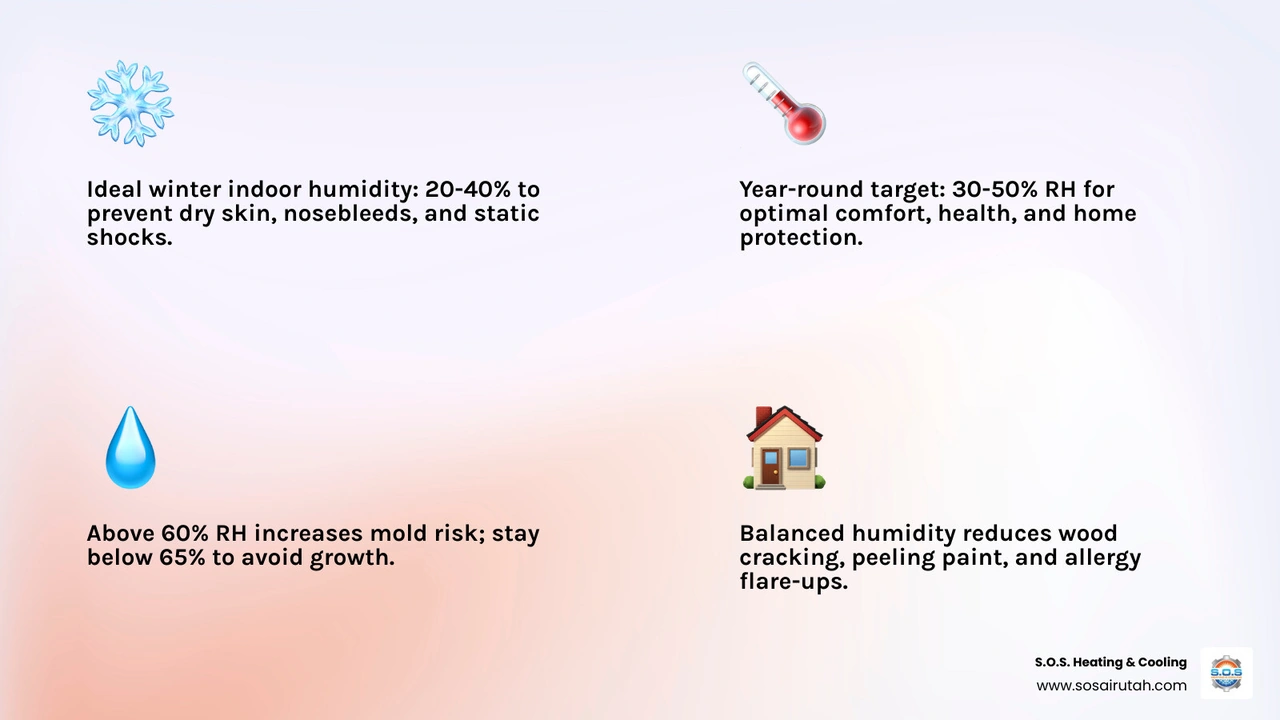
| Ideal Indoor Humidity | 30–50% year-round (20–40% in winter) |
Most homeowners don't think much about indoor humidity — until something feels off. Your skin is cracking, you keep waking up with a sore throat, or there's a faint musty smell you just can't shake. These aren't random annoyances. They're your home telling you the air is out of balance.
Indoor humidity that's too low or too high affects more than your comfort. It impacts your health, your sleep, your home's structure, and even how well your HVAC system performs. And here in Salt Lake City, where winters are brutally dry and summers can swing the other way, keeping humidity in that sweet spot takes a little awareness — and sometimes a little help.
I'm Bryson Ninow, an NATE-certified HVAC professional with years of experience helping Utah homeowners identify and solve the kinds of humidity problems that show up as signs your home is too dry or too humid — from cracked trim and static-filled winters to muggy basements and mold-prone bathrooms. Let's walk through exactly what to look for and what you can do about it.
Signs Your Home Is Too Dry or Too Humid: Start With the Ideal Range
Before we talk symptoms, we need a target. In most homes, ideal indoor relative humidity is 30% to 50%. That range is widely recommended for comfort, health, and protecting the home. Staying below 60% is also important because mold risk rises as humidity stays elevated, and once you get beyond roughly 65%, you're entering prime mold territory.
A simple way to think about it:
- Below 30%: usually too dry
- 30% to 50%: usually just right
- Above 50%: often too humid
- Above 60%: increased risk of mold, mildew, and condensation problems
A hygrometer, smart thermostat, or indoor air quality monitor can tell you where your home actually sits. Guessing works about as well as diagnosing a furnace by vibes alone.
What indoor humidity should feel like in winter vs. summer
Humidity comfort changes a bit by season.
In winter, many homes feel best around 20% to 40%, especially when outdoor temperatures are very cold. Slightly lower indoor humidity in winter can help prevent window condensation and moisture damage around frames and walls.
In summer, most homes are more comfortable around 30% to 50%. Higher than that can make the house feel sticky and warmer than the thermostat says.
Why does winter feel so dry? Because cold air holds less moisture than warm air. When that cold outside air comes in and gets heated, its relative humidity drops sharply. One example from the research: air that is 15 degrees outside with 75% relative humidity can drop to around 15% humidity once heated indoors to 70 degrees. That is a dramatic shift, and your skin, sinuses, and wood floors will all notice.
Why relative humidity matters for comfort, health, and your house
Relative humidity affects almost everything inside your home:
- Your skin and sinuses can dry out when humidity is too low
- Your sleep can suffer when humidity is too high and the air feels muggy
- Wood floors, trim, and furniture can shrink in dry air or swell in damp air
- Condensation can form on windows and pipes when humidity is too high
- Mold and dust mites are more likely when indoor moisture stays elevated
- Very dry air can irritate airways and make respiratory symptoms worse
If you want a deeper look at why this matters in our climate, read Humidity Control Benefits for High Desert Homes.
7 Signs Your Home Is Too Dry
Dry indoor air is especially common across Salt Lake City and nearby Utah communities during winter. Here are the signs we see most often.
- Static shocks everywhere
- Dry skin, chapped lips, or itchy scalp
- Scratchy throat, dry nose, or nosebleeds
- Itchy, irritated eyes
- More coughing or breathing irritation
- Cracking wood, trim, or furniture
- Gaps in flooring or doors that suddenly fit differently
These signs often show up together. If your fingertips are splitting and your doorknob is trying to fight you with electricity, low humidity is a strong suspect.
Signs your home is too dry in winter
Winter is peak dry-air season because several things happen at once:
- Furnaces heat already-dry outdoor air
- Fireplaces add heat that can further dry indoor air
- Exhaust fans push moist air outside
- Leaky ductwork can pull in dry air
- Ventilation systems may need balancing
- Utah's high desert climate starts dry before your heating system even turns on
That is why so many homeowners notice problems the moment the heating season ramps up. If this sounds familiar, our guide on Humidity Control Benefits for High Desert Homes goes deeper into Utah-specific causes.
How dry air affects your health and home
Low humidity does not just feel annoying. It can affect your body and your house.
Health effects of dry air can include:
- Dry nasal passages and throat
- Increased nosebleeds
- Irritated sinuses
- Worse asthma or respiratory discomfort
- Dry, itchy skin
- Flare-ups for eczema-prone skin
- Tired, irritated eyes
Dry air can also reduce moisture in the mucous membranes that help trap particles in your nose and throat. That can leave you feeling more irritated and less comfortable during cold season.
Home effects of dry air can include:
- Shrinking wood trim
- Gaps in hardwood flooring
- Cracked caulk or drywall
- Warped doors
- Damage to wood furniture
- Trouble for musical instruments made of wood
Simple DIY tests for air that is too dry
You do not always need fancy tools to get a clue.
Try these:
- Ice water glass test: Set a glass of ice water in the room for about five minutes. If there is little or no moisture forming on the outside, the air may be too dry.
- Static test: If socks plus carpet equals mini lightning storm, that points toward low humidity.
- Plant and soil check: Houseplants drying out unusually fast can be another hint.
- Hygrometer check: The most reliable DIY method is still a digital hygrometer.
7 Signs Your Home Is Too Humid
High humidity is less common than dry air in Utah winters, but it absolutely happens, especially in bathrooms, kitchens, basements, and during warmer months.
Watch for these signs:
- Sticky or clammy air
- Musty smells
- Condensation on windows
- Visible mold or mildew spots
- Peeling paint or bubbling finishes
- Swollen wood, sticking doors, or warped flooring
- More allergy symptoms or poor sleep
If your home feels damp even when the thermostat says it should feel comfortable, excess humidity may be the reason.
Signs your home is too dry or too humid after cooking, showering, or rain
Daily life adds a surprising amount of moisture indoors. Cooking alone can raise local relative humidity by up to 30% in the immediate area. Hot showers, running the dishwasher, doing laundry, and even breathing all add water vapor to indoor air.
Signs these moisture loads are not leaving your home properly include:
- Bathroom mirrors and walls staying wet long after a shower
- Kitchen windows fogging when you cook
- Damp-smelling closets or bathrooms
- Basement odors after rain
- Moisture around windows, pipes, or exterior walls
A good rule of thumb: run your bathroom exhaust fan for about 20 minutes after a shower. That can remove a large share of that moisture before it settles into walls and finishes.
How excess humidity affects your health and home
Too much humidity can be a bigger problem than many people realize.
Health issues may include:
- More allergy flare-ups
- Worse asthma symptoms
- Irritation from mold and mildew
- Poor sleep in muggy rooms
- General stuffiness or discomfort
Home issues may include:
- Mold growth
- Mildew on grout or caulk
- Peeling paint
- Rust or corrosion on some metal surfaces
- Swollen trim and doors
- Warped wood floors
- Damage to drywall and insulation
Mold can begin growing on damp materials in as little as 24 to 48 hours, so recurring moisture should never be ignored.
DIY checks that suggest your home is too humid
Here are a few practical checks:
- Look for fog or droplets on the inside of windows
- Check closets and corners for musty odors
- Inspect around supply vents, pipes, and toilets for dampness
- Watch for recurring mildew in bathrooms
- Use a moisture meter on suspicious walls if you have one
- Use a hygrometer in several rooms to find problem areas
What Causes Indoor Air to Get Too Dry or Too Humid?
Indoor humidity problems usually come from a mix of weather, HVAC performance, moisture sources, and ventilation.
Common causes include:
- Winter heating
- Summer moisture infiltration
- Tight modern construction
- Poor ventilation
- Leaks or drainage issues
- Dirty filters
- Oversized or poorly running AC systems
- Daily activities like cooking and showering
Why homes get too dry in cold weather
This is mostly physics. Cold air does not hold much moisture. Once you heat that air indoors, the relative humidity drops. Add a furnace, fireplace, exhaust fans, and Utah's naturally dry climate, and the result can be desert-level dryness inside your home.
Other contributors include:
- Overventilation
- Leaky ducts
- Running exhaust fans longer than needed
- Air leaks that pull in dry outdoor air
Why homes get too humid in warm weather
High humidity indoors during warm weather usually points to one or more of these issues:
- Humid outdoor air leaking in
- AC that is not removing enough moisture
- Oversized AC that short cycles
- Poor bathroom or kitchen ventilation
- Plumbing leaks
- Wet crawlspace, basement, or foundation moisture
- Rainwater drainage problems around the home
An oversized air conditioner is a sneaky one. It may cool the house quickly, but if it shuts off too fast, it does not run long enough to remove much moisture. That leaves the home cool but clammy.
Common humidity management mistakes to avoid
A few mistakes make humidity problems worse:
- Not measuring humidity at all
- Over-humidifying in winter
- Buying the wrong size humidifier or dehumidifier
- Ignoring dirty HVAC filters
- Skipping maintenance
- Blocking vents
- Leaving leaks unfixed
- Treating mold but not fixing the moisture source
Balance matters. Too dry is uncomfortable, but too humid creates its own mess.
How to Measure and Fix Humidity Problems the Right Way
The best approach is simple: measure first, then fix the cause, then choose the right equipment.
Best ways to measure indoor humidity accurately
A digital hygrometer is the easiest tool for most homeowners. Many basic models are inexpensive, easy to read, and accurate enough for everyday use.
For better readings:
- Place the sensor about 3 feet off the floor
- Keep it away from direct sunlight
- Do not put it right next to a vent
- Avoid kitchens and bathrooms for your main reading
- Check multiple rooms if comfort varies
- Monitor weekly during spring and fall when conditions shift
Some smart thermostats and indoor air quality monitors can also track humidity over time.
How to fix air that is too dry
If your home is below 30% humidity, try these fixes:
- Use a portable humidifier in problem rooms
- Install a whole-home humidifier for more even control
- Air-dry laundry indoors when appropriate
- Add moisture with normal daily activities like cooking
- Lower the thermostat a bit if your home is overheated
- Maintain any humidifier properly, including regular cleaning and water panel replacement
Portable units can help one room. Whole-home systems are usually better if dryness affects the entire house.
If you are exploring whole-home options in Utah, learn more here:
- Whole Home Humidifiers Riverton UT
- Whole Home Humidifiers South Jordan UT
- Whole Home Humidifiers Draper UT
- Whole Home Humidifiers Layton UT
- Whole Home Humidifiers Sandy UT
- Whole Home Humidifiers Murray UT
How to fix air that is too humid
If your indoor humidity is above 50% to 60%, focus on moisture removal and airflow:
- Use a dehumidifier
- Run bathroom fans during and after showers
- Use your kitchen vent when cooking
- Fix plumbing leaks promptly
- Improve drainage around the home
- Keep gutters directing water away from the foundation
- Schedule AC maintenance
- Consider whole-house dehumidification if the issue is widespread
Helpful reading:
- Benefits of Dehumidifiers in the Summer
- Whole House Dehumidification Salt Lake City UT
Here is a simple comparison of common options:
| Solution | Best For | Pros | Limits |
|---|---|---|---|
| Portable humidifier | One room | Quick relief | Needs filling and cleaning |
| Whole-home humidifier | Whole house dryness | Even comfort through ductwork | Requires proper setup and maintenance |
| Portable dehumidifier | Small damp area | Useful in one space | Limited coverage |
| Whole-house dehumidifier | Widespread excess humidity | Strong whole-home control | Best when integrated correctly |
What your HVAC system should do for humidity control
Your HVAC system plays a huge role in indoor moisture levels.
A healthy system should:
- Circulate air evenly
- Support proper filtration
- Let the AC remove moisture during cooling season
- Work with a whole-home humidifier in dry months
- Avoid short cycling
- Keep airflow balanced room to room
If your AC is oversized, poorly maintained, or short cycling, it may not dehumidify well. If your furnace or duct system is contributing to winter dryness, a whole-home humidifier may be the right upgrade.
When to Call a Pro for Signs Your Home Is Too Dry or Too Humid
Sometimes the fix is simple. Sometimes your home is waving a full-size red flag.
Call for professional help if humidity problems are persistent, widespread, or tied to visible home damage.
Red flags that need professional attention now
Do not wait if you notice:
- Visible mold growth
- Peeling paint that keeps returning
- Wet drywall or ceiling stains
- Persistent window condensation
- Sweating ducts or pipes
- Severe room-to-room humidity differences
- Doors swelling or flooring warping
- Repeated winter nosebleeds and severe dryness despite basic fixes
- A damp or musty smell you cannot locate
These can point to hidden leaks, ventilation issues, duct problems, or HVAC sizing problems that will not solve themselves.
Seasonal humidity tips for Utah homeowners
Utah homes need a seasonal approach.
- Winter: Check humidity often. Dry air is common once heating season starts.
- Spring and fall: Monitor weekly because conditions swing fast.
- Summer: Watch bathrooms, kitchens, basements, and any room that feels clammy.
- After storms or monsoon moisture: Check windows, exterior walls, and lower levels for dampness.
For more Utah-specific guidance, visit Humidity Control Benefits for High Desert Homes.
If you need expert help, we can inspect your HVAC system, ventilation, and indoor air quality setup to find the real source of the problem. At S.O.S. Heating & Cooling, we help homeowners across Salt Lake City and surrounding areas solve whole-home comfort issues with practical, lasting solutions.
Conclusion
When you know the signs your home is too dry or too humid, it gets much easier to protect your comfort, your health, and your house.
The goal is simple: keep indoor humidity in the 30% to 50% range most of the year, with a slightly lower target often making sense in winter. If your home is shocking you, drying you out, fogging your windows, or growing musty smells, the air is telling you something.
Start with a hygrometer. Look for the signs. Fix the cause, not just the symptom.
And if you want help creating healthier, better-balanced indoor air, explore our air quality services.
Contact Us
Let's Get You From Distress to Rest
No heat, no cool, a backed-up drain, or just due for a tune-up? Call now or request service and our local team will be on the way — upfront pricing, no surprises.